Hygiene in drinking water reservoirs: For pressure compensation when the water level in the water chamber changes

Our ventilation systems
Ventilation and air filtration in drinking water reservoirs
Filtering the supply air reduces hygiene risks.
Typically, the water surface in a reservoir is constantly in motion. During the filling process air is streaming out, whereas during the emptying process ambient air is sucked in. In this respiration process also particles contained within the air are carried into the drinking water. Since also germs, viruses, spores and pollen are a part of such particles, the resulting hygiene problems are severe. The calculated average annual load for a 500 m³ tank amounts to 21,000 mg dust or 1,680 billion germs. Even the elevated reservoir on a greenfield site is not spared from this.
Filters for suspended particles as used successfully in operation rooms of hospitals ensure that the air is really clear. And where farmers spread slurry on their land, the only solution that helps is an additional activated charcoal filter. And what about costs? The extra costs for a filter for suspended particles are minimal compared to that for a coarse material filter. Operators should therefore not shrink from this investment into the hygiene safety of their water reservoir.

HUBER top sellers in the air filtering for drinking water storage tanks sector
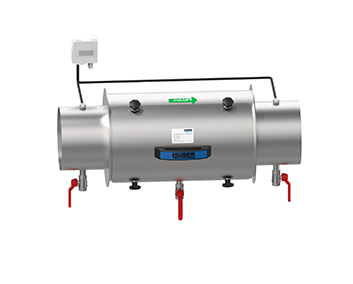
Aeration / deaeration plant L251
Price on request
Natural ventilation with air flow on both sides
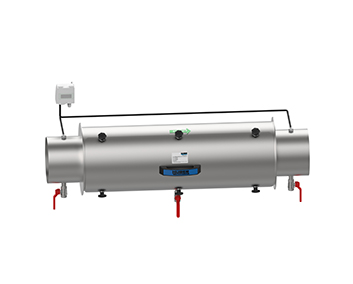
Be- und Entlüftungsanlage Typ L252
Price on request
Natural ventilation with air flow on both sides

Aeration / deaeration plant L361
Price on request
Safety louvre, air duct, air filter unit and safety valve
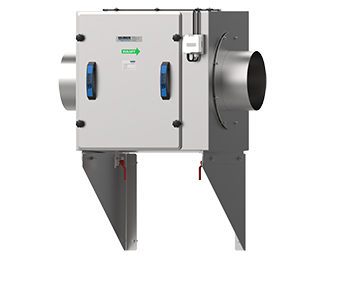
Aeration / deaeration plant L661
Price on request
Safety louvre, air duct, air filter unit and safety valve
Producing high-quality drinking water and distributing it safely to consumers
Drinking water is fresh water that is suitable for human consumption if defined requirements are met.
The quality requirements for drinking water differ from country to country, and for Germany the Drinking Water Ordinance (TrinkwV) applies here, among other regulations.
Drinking water abstraction, treatment and distribution
Extraction from wells: Wells can be several hundred metres deep and are used to extract groundwater. Depending on the depth of the well and local conditions, water quality varies and the water may need to be treated further.
Extraction from springs: Spring water is groundwater that comes to light. The water quality depends, among other things, on whether the spring is fed by deep groundwater or by less deep surface water. The risk of possible adverse health effects is greater in the case of near-surface water.
Seawater is also a common source of drinking water in many countries, with technically complex and energy-intensive seawater desalination plants being used. Drinking water can be obtained from rivers and lakes. Because of the substances that are often present, it is usually necessary to treat the water before it can be used. Seawater is also a common source of drinking water in many countries, with technically complex and energy-intensive seawater desalination plants being used.
Storage and distribution: After treatment, the drinking water is made available to the consumers in the required quantity and pressure as well as the necessary quality via a water distribution system consisting of storage tanks, pressure boosters and pipelines, among other components.
HUBER Solutions for drinking water
Water treatment: selected process technology for the production of drinking water from groundwater, surface water and seawater.
Water storage: the right equipment for water storage tanks and elevated reservoirs to ensure that drinking water is stored safely and its high quality is maintained.
Water distribution: the right equipment for water networks is a prerequisite for a sustainable and economical supply of drinking water to the population.